
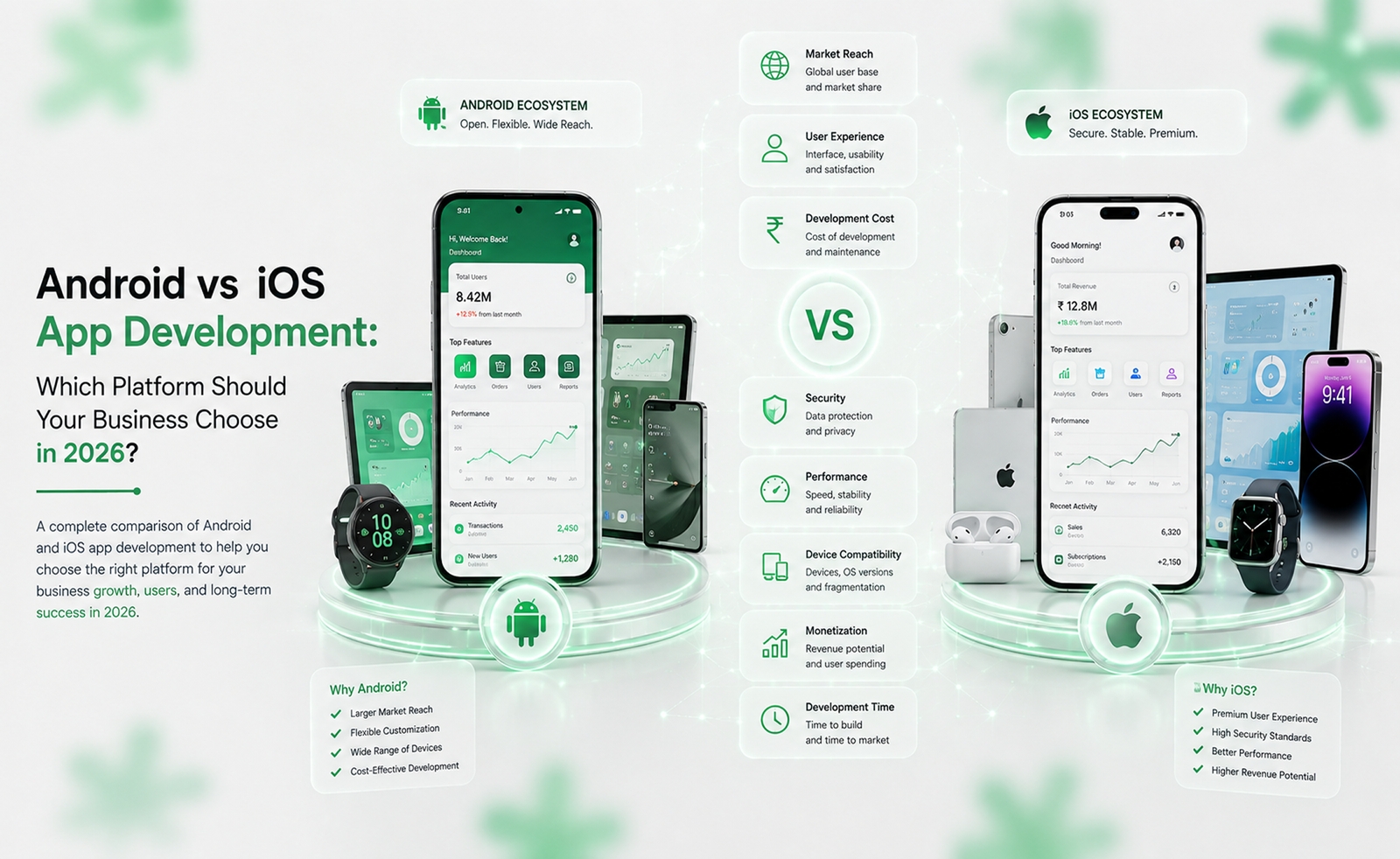
Android App Development
Android is an open mobile platform used by manufacturers across a wide range of smartphones and tablets. Android applications are commonly developed using technologies such as:- Kotlin
- Java
- Android SDK
- Jetpack
- Android Studio
Key Advantages of Android
- Large and diverse user base
- Wide range of devices
- Flexible hardware options
- Greater market reach
- Flexible app distribution
- Strong support for customization
- Suitable for a wide range of business applications
iOS App Development
iOS is Apple’s mobile operating system and powers devices such as the iPhone and iPad. iOS applications are commonly developed using:- Swift
- SwiftUI
- Xcode
- Apple’s development frameworks
Key Advantages of iOS
- Consistent hardware ecosystem
- Strong user experience
- High-quality app standards
- Strong security
- Excellent hardware-software integration
- Premium customer segment
- Consistent software updates
Android vs iOS: Key Differences
1. Target Audience
Android reaches users across a wide range of devices and price points. iOS primarily targets Apple users and is concentrated within Apple’s ecosystem. Your target audience should therefore be one of the first factors you evaluate. If your customers use a wide variety of smartphones, Android may provide broader reach. If your target customers are primarily Apple users, iOS may be more suitable.2. Development Cost
The cost of developing an Android or iOS application depends on the complexity of the project rather than the platform alone. Factors affecting development cost include:- Number of features
- UI/UX complexity
- Backend requirements
- API integrations
- Payment systems
- Security requirements
- Testing requirements
- Third-party services
3. Development Time
Development time depends on the application’s features and complexity. Android development may require testing across a wider variety of devices and screen sizes. iOS development can benefit from Apple’s more standardized hardware environment. However, the actual development timeline depends primarily on the application’s requirements rather than the platform alone.4. Security
Security is essential for businesses handling customer information, financial transactions, or sensitive data. iOS benefits from Apple’s controlled ecosystem and strict application distribution policies. Android also provides strong security capabilities, but its larger and more diverse device ecosystem means developers need to carefully consider device compatibility, permissions, application security, and updates. For either platform, security should be designed into the application from the beginning.5. App Design and User Experience
Both platforms have established design guidelines and user expectations. Android applications can provide highly flexible interfaces across different device types. iOS provides a more standardized experience because Apple controls both hardware and operating system design. A professional mobile app should therefore be designed specifically for the platform rather than simply copying the same interface everywhere.6. Monetization Opportunities
The right platform can also depend on how your business plans to generate revenue. Common mobile app monetization models include:- Paid applications
- In-app purchases
- Subscriptions
- Advertising
- E-commerce transactions
- Premium features
- Service bookings
7. Google Play vs Apple App Store
Android applications are distributed primarily through Google Play, while iOS applications are distributed through the Apple App Store. Both platforms have review processes and requirements that developers need to follow before publishing an application. Businesses should consider:- App approval requirements
- Store policies
- Application updates
- User reviews
- Ratings
- App discoverability
- Store listing optimization
8. Performance and Device Compatibility
Android applications need to work across a large number of devices with different screen sizes, hardware configurations, operating system versions, and manufacturers. This makes compatibility testing particularly important. iOS applications generally operate within a more controlled hardware ecosystem, which can simplify device testing and optimization. However, both platforms require thorough testing to ensure:- Fast performance
- Reliable navigation
- Smooth animations
- Stable functionality
- Proper screen layouts
- Efficient battery usage
- Secure data handling
9. Native vs Cross-Platform Development
Businesses don’t always have to choose between developing completely separate Android and iOS applications. Cross-platform technologies such as React Native and Flutter allow developers to build applications that can run across multiple platforms using a shared codebase.Native Development
Native development involves creating separate applications specifically for Android and iOS. Advantages:- Platform-specific performance
- Deep access to native features
- Highly optimized user experience
- Greater platform-level control
Cross-Platform Development
Cross-platform development uses a shared codebase for multiple platforms. Advantages:- Faster development
- Reduced duplicate development work
- Easier maintenance
- Suitable for many business applications
- Efficient for launching on multiple platforms
Android vs iOS Comparison
| Feature | Android | iOS |
|---|---|---|
| Device Range | Very Wide | More Controlled |
| Market Reach | Broad | Strong Premium Segment |
| Development | Kotlin / Java | Swift |
| Development Environment | Android Studio | Xcode |
| App Store | Google Play | Apple App Store |
| Device Testing | More Diverse | More Standardized |
| Customization | High | More Controlled |
| Security | Strong | Strong |
| User Experience | Flexible | Highly Consistent |
| Best For | Broad Market Reach | Apple-Focused Audiences |
Which Platform Should Your Business Choose?
There is no universal answer. The best platform depends on your business objectives and target customers.Choose Android First If:
- Your target audience uses a wide range of devices
- You want broad market coverage
- You are targeting different price segments
- Your business focuses heavily on emerging markets
- You want to reach a diverse Android user base
Choose iOS First If:
- Your target customers primarily use Apple devices
- You are targeting premium customer segments
- Your business model relies on subscriptions or paid digital services
- Consistent hardware and software experience is important
- Your target market has strong iPhone adoption
Choose Both If:
- Your customers use both platforms
- Mobile applications are a major part of your business
- You want maximum market coverage
- Your long-term strategy requires both ecosystems
How Shweta Technologies Helps Businesses
At Shweta Technologies, we develop mobile applications based on business goals, target audiences, technical requirements, and long-term growth plans. Our mobile app development services include:- Android App Development
- iOS App Development
- Cross-Platform App Development
- Custom Mobile App Development
- UI/UX Design
- Backend & API Development
- Payment Gateway Integration
- AI Integration
- Cloud Integration
- App Maintenance & Support
Final Thoughts
Choosing between Android and iOS is an important decision, but businesses should look beyond the platform itself. Consider your:- Target audience
- Geographic market
- Budget
- Business model
- Required features
- Monetization strategy
- Long-term growth plans
Contact Shweta Technologies
Shweta Technologies LLP
Ahmedabad, Gujarat, India
📞 +91 63561 37551
✉️ shwetatechnologie@gmail.com
🌐 https://shwetatech.com/