
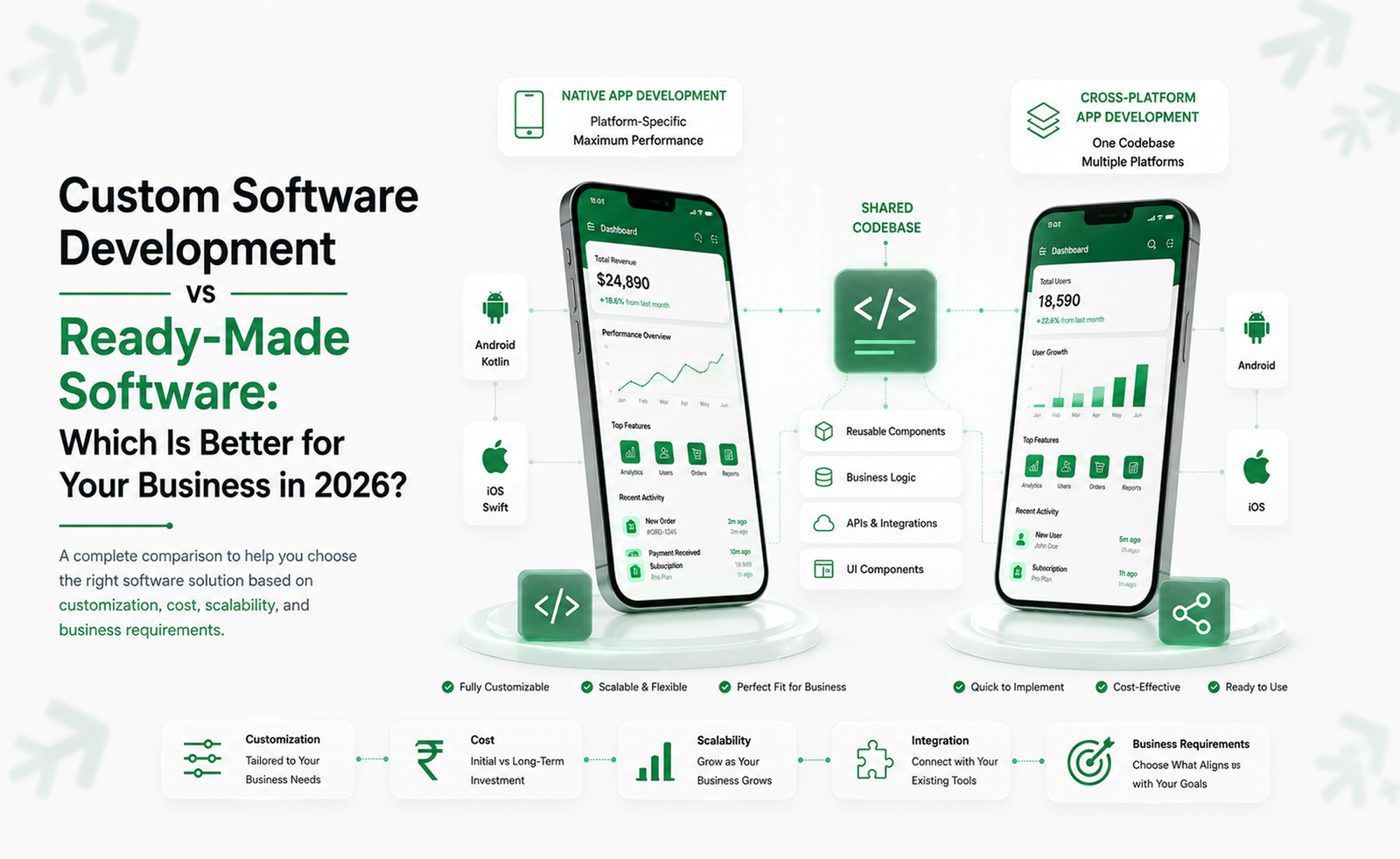
What Is Native App Development?
Native app development means building an application specifically for one operating system. For example:- Android apps are commonly developed using Kotlin or Java.
- iOS apps are commonly developed using Swift.
What Is Cross-Platform App Development?
Cross-platform app development allows developers to build applications for multiple operating systems using a shared codebase. Popular technologies include:- React Native
- Flutter
- .NET MAUI
- Other modern cross-platform frameworks
Why Choosing the Right Approach Matters
The development approach can affect the long-term success of a mobile application. It can influence:- Development cost
- Development timeline
- Application performance
- User experience
- Maintenance
- Scalability
- Device integration
- Development resources
Native vs Cross-Platform: Key Differences
The biggest difference between native and cross-platform development is how the application is built and maintained across different operating systems.Development
Native development requires separate applications for different platforms. Cross-platform development uses a shared codebase for multiple platforms.Cost
Native development can cost more when separate Android and iOS applications are required. Cross-platform development can reduce duplicate development work and may lower overall development effort.Development Time
Native development generally requires more time when multiple platforms are involved. Cross-platform development can accelerate development because developers can reuse a significant amount of code.Performance
Native applications generally provide excellent platform-specific performance. Modern cross-platform frameworks can also provide strong performance for most business applications.Customization
Native development provides greater control over platform-specific functionality. Cross-platform development provides extensive customization but may require native code for certain specialized features.Development Cost
Cost is an important factor for businesses planning a mobile application. Native development may require separate development and testing for Android and iOS. This can increase development costs when both platforms are required. Cross-platform development can reduce duplicate work because developers can reuse a shared codebase. However, the actual cost depends on factors such as:- Number of features
- UI/UX complexity
- Backend development
- API integrations
- Payment systems
- Authentication
- Security requirements
- Testing
Development Time
Development time can be another major difference. With native development, Android and iOS applications are generally developed separately when both platforms are required. Cross-platform development can speed up the process because much of the application logic and interface can be shared. This can be especially useful for startups and businesses that want to launch a Minimum Viable Product (MVP) quickly and collect user feedback before expanding the application. However, complex applications can still require significant development time regardless of the technology.Performance and User Experience
Performance is one of the strongest advantages of native development. Native applications are optimized specifically for their operating system and can provide excellent performance for demanding applications. They are particularly suitable for:- High-performance applications
- Advanced animations
- Gaming
- Complex graphics
- Intensive hardware usage
- Real-time processing
Device Features and Integrations
Mobile applications often need access to device features such as:- Camera
- GPS
- Bluetooth
- Biometrics
- Notifications
- Sensors
- NFC
- File storage
Maintenance and Scalability
Maintaining separate native applications can require more development effort. When a feature needs to be updated, developers may need to implement and test the changes separately for Android and iOS. Cross-platform development can simplify maintenance because shared functionality can often be updated through a common codebase. However, both approaches can be scalable when the application is built using a well-planned architecture. Scalability depends on:- Backend architecture
- Database design
- API structure
- Cloud infrastructure
- Code quality
- Security
- Application architecture
Native App Development: Advantages and Disadvantages
Advantages
Native development offers several benefits:- Excellent performance
- Full access to platform APIs
- Strong hardware integration
- Platform-specific user experience
- Advanced customization
- Better control over complex functionality
- Suitable for demanding applications
Disadvantages
- Higher development effort for multiple platforms
- Potentially higher cost
- Separate codebases
- More maintenance work
- Longer development time for multi-platform applications
Cross-Platform App Development: Advantages and Disadvantages
Advantages
Cross-platform development provides:- Shared codebase
- Faster development
- Reduced duplicate development
- Potentially lower development costs
- Easier maintenance
- Faster multi-platform deployment
- Efficient development for startups
Disadvantages
- Some specialized features may require native development
- Highly complex applications may need platform-specific optimization
- Framework updates can require compatibility testing
- Some platform-specific experiences may require additional customization
Native vs Cross-Platform Comparison
| Feature | Native Development | Cross-Platform Development |
|---|---|---|
| Codebase | Separate | Shared |
| Development Time | Usually Longer | Usually Faster |
| Cost | Potentially Higher | Potentially Lower |
| Performance | Excellent | Very Good to Excellent |
| Platform Optimization | Excellent | Good to Excellent |
| Maintenance | More Effort | Generally Easier |
| Device Access | Full | Strong |
| Customization | Very High | High |
| Best For | Complex Applications | Most Business Applications |
When Should Your Business Choose Native Development?
Native development may be the better choice when your application requires maximum performance or advanced platform-specific capabilities. Consider native development if you need:- High-performance applications
- Advanced graphics
- Gaming functionality
- Complex animations
- Specialized hardware integration
- Platform-specific features
- Highly customized user experiences
When Should Your Business Choose Cross-Platform Development?
Cross-platform development can be a strong choice for businesses that want to launch applications on Android and iOS efficiently. Consider it when you need:- Faster development
- Reduced development effort
- Android and iOS support
- Shared business logic
- Easier maintenance
- Faster market launch
- Standard business functionality
- E-commerce
- Booking platforms
- Business management apps
- Customer portals
- Education platforms
- Service applications
- SaaS products
How to Choose the Right App Development Approach
Before selecting native or cross-platform development, businesses should consider several factors.1. Target Audience
Determine whether your customers use Android, iOS, or both.2. Application Complexity
Simple and moderately complex applications can often work well with cross-platform development. Highly specialized applications may benefit from native development.3. Budget
Consider both initial development costs and long-term maintenance requirements.4. Performance Requirements
If maximum performance is essential, native development may be preferable.5. Development Timeline
If launching quickly is important, cross-platform development can provide an efficient route to multiple platforms.6. Future Growth
Choose an architecture that can support future users, features, integrations, and business expansion.The Future of Mobile App Development in 2026
Mobile applications are becoming increasingly intelligent as businesses adopt AI, automation, cloud technologies, and advanced digital experiences. Modern applications are increasingly incorporating:- AI-powered assistants
- Personalized experiences
- Cloud integration
- Real-time communication
- Biometric authentication
- Advanced analytics
- Automation
- AI-driven recommendations
How Shweta Technologies Helps Businesses
At Shweta Technologies, we help businesses plan, design, and develop mobile applications based on their specific business requirements. Our services include:- Android App Development
- iOS App Development
- Cross-Platform App Development
- Custom Mobile App Development
- UI/UX Design
- Backend & API Development
- Payment Gateway Integration
- AI Integration
- Cloud Integration
- App Maintenance & Support
Final Thoughts
There is no single mobile app development approach that is perfect for every business. Native app development is an excellent choice when maximum performance, advanced hardware access, and platform-specific functionality are priorities. Cross-platform app development is often a practical choice for businesses that want to support Android and iOS while reducing duplicate development effort and launching faster. The right decision depends on your:- Business goals
- Target audience
- Budget
- Application complexity
- Performance requirements
- Required features
- Development timeline
- Long-term growth plans
Contact Us
Shweta Technologies LLPAhmedabad, Gujarat, India 📞 +91 63561 37551
✉️ shwetatechnologie@gmail.com
🌐 https://shwetatech.com/ Planning a mobile application for your business? Contact Shweta Technologies to discuss your requirements and choose the right native or cross-platform development strategy.