
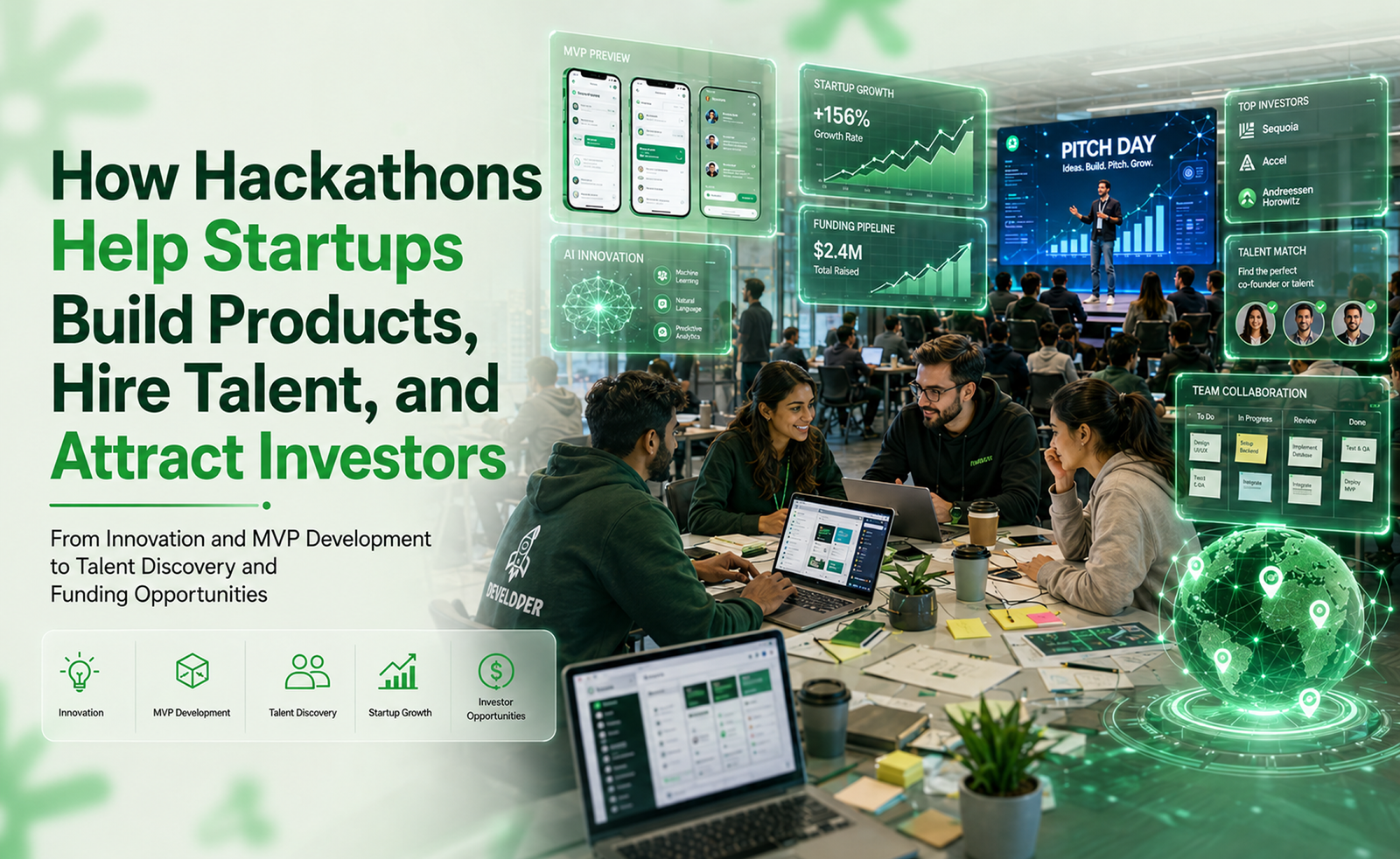
What Is a Startup Hackathon?
A startup hackathon is an innovation-focused event where participants work individually or in teams to solve challenges, create products, and develop business ideas within a limited timeframe. Participants typically include:- Startup Founders
- Software Developers
- UI/UX Designers
- Entrepreneurs
- Students
- Product Managers
- Industry Experts
- Investors and Mentors
Why Hackathons Matter for Startups
Startups operate in highly competitive environments where speed is often the difference between success and failure. Hackathons help startups:- Develop products faster
- Validate business ideas
- Discover talented individuals
- Build strong startup communities
- Generate media attention
- Attract investors
- Reduce innovation costs
- Accelerate business growth
How Hackathons Help Startups Build Products
Rapid Product Innovation
Innovation is the foundation of startup success. Hackathons create focused environments where teams can experiment with new ideas, technologies, and business models without traditional corporate limitations. This often leads to breakthrough concepts that may not emerge during standard development processes.Faster MVP Development
A Minimum Viable Product (MVP) helps startups test market demand before investing heavily in development. Hackathons encourage teams to focus on core functionality and rapidly build working prototypes. Benefits include:- Reduced development timelines
- Lower product risk
- Faster customer feedback
- Improved market validation
- Quicker product launches
Real-World Problem Solving
Most hackathons focus on solving practical business challenges. Participants bring fresh perspectives and diverse experiences, helping startups discover innovative solutions to complex problems. This creates significant value for product development and business growth.The Product Development Process During Hackathons
1. Challenge Identification
Startups define specific challenges participants need to solve. Examples include:- AI Applications
- Healthcare Solutions
- FinTech Platforms
- Education Technology
- Sustainability Projects
- Customer Experience Improvements
2. Team Formation
Participants create multidisciplinary teams based on skills and interests. Teams often include:- Developers
- Designers
- Business Strategists
- Marketing Professionals
- Product Managers
3. Product Design & Development
Teams research, design, build, and test their solutions within the event timeframe. Activities include:- User Research
- Wireframing
- UI/UX Design
- Software Development
- Prototype Creation
- Business Planning
4. Mentorship
Industry experts provide guidance and feedback throughout the event. Mentors help participants:- Validate Ideas
- Improve User Experience
- Refine Business Models
- Solve Technical Challenges
5. Final Product Presentation
Teams present their solutions before judges, investors, and startup leaders. Presentations often include:- Problem Statement
- Solution Overview
- Product Demonstration
- Market Opportunity
- Business Potential
How Hackathons Help Startups Hire Talent
Recruitment is one of the biggest challenges facing modern startups. Traditional hiring methods often fail to accurately evaluate practical skills and creativity. Hackathons provide a better solution.Real-Time Skill Evaluation
During hackathons, startups can observe participants in real-world working environments. They can evaluate:- Technical Skills
- Problem-Solving Ability
- Communication Skills
- Creativity
- Leadership Qualities
- Team Collaboration
Access to High-Quality Talent
Hackathons attract ambitious and highly motivated individuals. Participants often include:- Software Engineers
- AI Specialists
- Data Scientists
- Designers
- Product Managers
- Startup Enthusiasts
Lower Hiring Costs
Traditional recruitment campaigns can be expensive and time-consuming. Hackathons allow startups to identify potential hires while simultaneously investing in innovation activities. This improves recruitment efficiency and reduces overall hiring costs.How Hackathons Attract Investors
Investors continuously search for innovative startups with strong growth potential. Hackathons create opportunities for founders to demonstrate their ideas and capabilities.Showcasing Innovation
Hackathon projects demonstrate:- Technical Expertise
- Product Potential
- Founder Capabilities
- Market Demand
- Execution Ability
Networking Opportunities
Many hackathons involve:- Angel Investors
- Venture Capital Firms
- Accelerators
- Incubators
- Industry Leaders
Funding Opportunities
Many startups receive:- Seed Funding
- Mentorship Support
- Accelerator Invitations
- Strategic Partnerships
- Investor Meetings
Additional Benefits of Startup Hackathons
Brand Awareness
Hackathons generate attention across:- Social Media Platforms
- Startup Communities
- Universities
- Technology Networks
- Industry Publications
Community Building
Strong startup ecosystems are built through collaboration. Hackathons bring together:- Founders
- Students
- Developers
- Mentors
- Investors
- Industry Experts
Market Validation
Hackathons provide access to expert feedback and early user insights. This helps startups:- Refine Products
- Improve Features
- Validate Business Models
- Reduce Market Risk
Business Impact of Hackathons
| Business Objective | Hackathon Benefit |
|---|---|
| Product Development | Rapid MVP Creation |
| Talent Acquisition | Access to Skilled Professionals |
| Investor Attraction | Startup Visibility & Funding Opportunities |
| Brand Awareness | Community & Media Exposure |
| Market Validation | Early Product Feedback |
| Business Growth | Partnerships & Expansion Opportunities |
Why Startup Accelerators Organize Hackathons
Startup accelerators and incubators regularly organize hackathons because they help identify innovative founders and high-potential startups. Hackathons allow them to:- Discover New Talent
- Evaluate Startup Ideas
- Support Innovation
- Create Investment Opportunities
- Build Entrepreneurial Communities
The Future of Startup Hackathons
As technology evolves, hackathons continue becoming more important. Future startup hackathons are expected to focus on:- Artificial Intelligence
- Blockchain Technology
- Cybersecurity
- Healthcare Innovation
- Quantum Computing
- Climate Technology
- Web3 Applications
How Shweta Technologies Supports Startup Innovation
At Shweta Technologies, we help startups and businesses build innovative digital solutions that drive growth and transformation. Our services include:- Custom Software Development
- Startup Technology Solutions
- Web & Mobile Application Development
- AI & Automation Services
- Digital Transformation Consulting
- Emerging Technology Solutions
Final Thoughts
Hackathons have become one of the most effective tools for startup growth. They help startups build products faster, discover talented professionals, attract investors, validate business ideas, and strengthen innovation ecosystems. Whether you are a founder, entrepreneur, accelerator, university, or technology company, hackathons offer a proven framework for turning ideas into successful businesses. The startups that innovate faster often grow faster—and hackathons remain one of the most powerful ways to accelerate that journey. 👉 Visit: https://shwetatech.com/ Partner with Shweta Technologies to build innovative, scalable, and future-ready digital solutions.Contact Us
Shweta Technologies LLPAhmedabad, Gujarat
📞 +91 63561 37551
✉️ shwetatechnologie@gmail.com
🌐 https://shwetatech.com/