
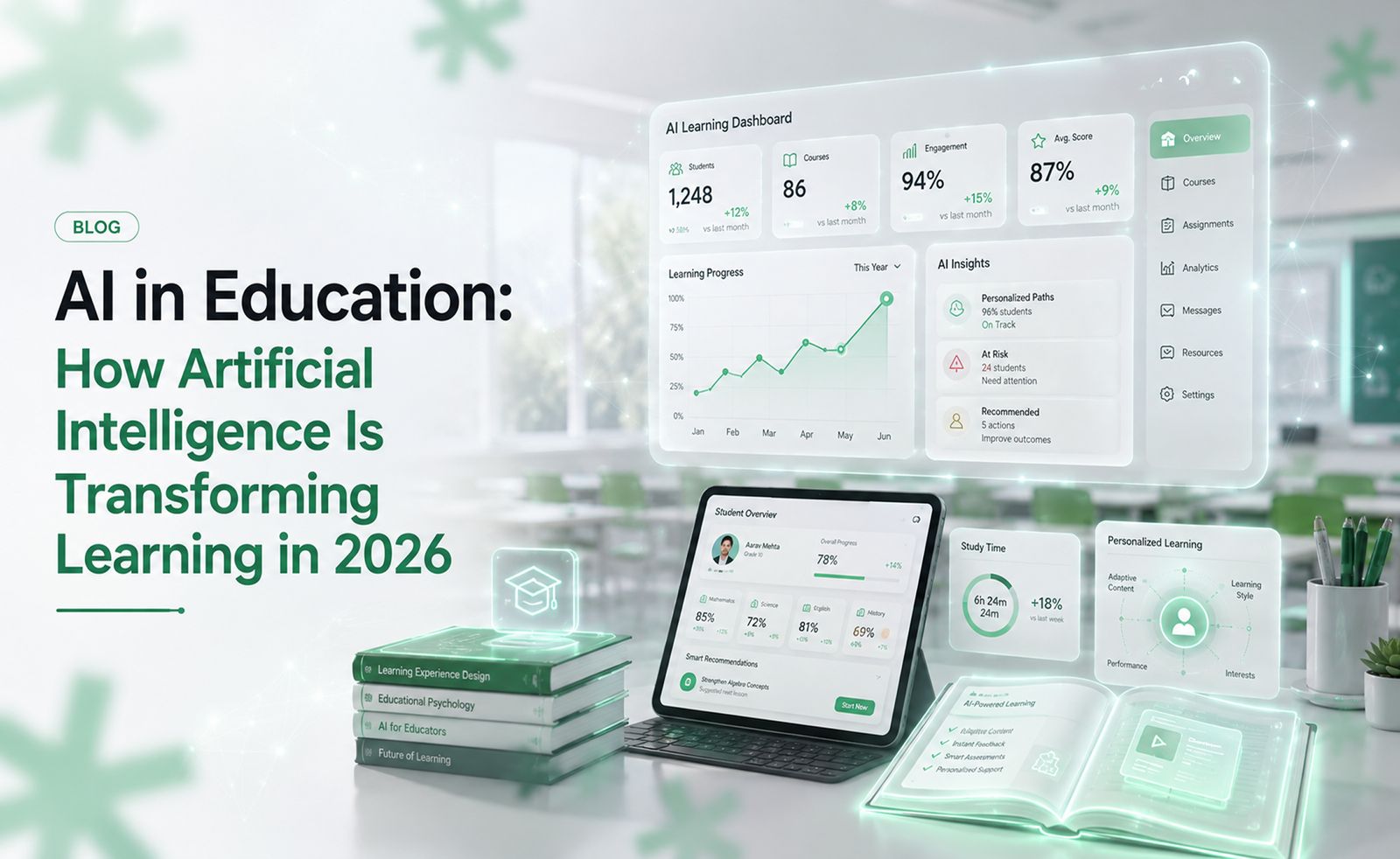
What Are AI-Powered Learning Platforms?
AI-powered learning platforms are digital education systems that use Artificial Intelligence to personalize, manage, and improve the learning experience. Unlike traditional Learning Management Systems (LMS), which primarily provide access to courses, assignments, and educational materials, AI-powered platforms can analyze student data and make intelligent recommendations. These platforms can use technologies such as:- Machine Learning
- Natural Language Processing
- Generative AI
- Predictive Analytics
- AI Chatbots
- Recommendation Systems
- Speech Recognition
- Data Analytics
Why Are AI Learning Platforms Becoming Important?
Traditional education often follows a fixed structure where students receive the same lessons, assignments, and assessments regardless of their individual performance. However, students do not learn in exactly the same way. Some students may understand a concept quickly, while others may need additional examples and practice. AI makes it possible to identify these differences and adapt learning accordingly. Educational institutions are adopting AI learning platforms because they can help:- Personalize education
- Improve student engagement
- Identify learning gaps
- Provide instant support
- Reduce teacher workload
- Analyze student performance
- Recommend relevant learning materials
- Automate repetitive educational tasks
- Improve learning outcomes
How AI-Powered Learning Platforms Work
AI-powered learning platforms collect information from different student interactions. This may include quiz results, course progress, assignment performance, learning time, completed lessons, and interactions with educational content. The AI system analyzes this information to identify patterns and determine what type of support the student may need. A typical AI learning workflow includes:- Student accesses educational content.
- The platform records learning activity.
- AI analyzes student performance.
- The system identifies strengths and weaknesses.
- AI recommends suitable content or activities.
- Student completes the recommended learning activity.
- The platform analyzes the new results.
- The learning experience continuously adapts.
Personalized Learning With AI
Personalized learning is one of the biggest advantages of AI-powered education. Instead of providing exactly the same learning path to every student, AI can create recommendations based on individual performance. For example, if a student performs well in one subject but struggles with another, the platform can recommend additional practice for the weaker subject. AI can personalize:- Course recommendations
- Learning materials
- Practice questions
- Difficulty levels
- Revision activities
- Learning schedules
- Educational videos
- Assessments
AI-Powered Virtual Tutors
AI-powered virtual tutors are becoming an important application of Artificial Intelligence in education. A virtual tutor can answer questions, explain concepts, provide examples, and guide students through learning activities. Unlike a traditional static FAQ system, modern AI tutors can understand natural language and respond conversationally. Students can ask questions such as:- “Explain this concept in simple language.”
- “Give me another example.”
- “Create five practice questions.”
- “Why is my answer incorrect?”
- “Help me revise this topic.”
AI for Teachers and Educators
AI-powered learning platforms are also valuable for teachers. Educators spend considerable time creating lesson plans, assessments, reports, and learning materials. AI can assist with many of these activities. Teachers can use AI to:- Generate quizzes
- Create practice questions
- Analyze student performance
- Identify learning gaps
- Recommend educational resources
- Prepare lesson plans
- Generate academic reports
- Answer repetitive student questions
- Track learning progress
AI in Assessments
Assessment is another important area where AI can improve education. AI-powered platforms can generate practice tests based on specific topics and difficulty levels. They can also analyze assessment results and identify areas where students are performing well or struggling. AI can support:- Automated quiz generation
- Question recommendations
- Adaptive assessments
- Objective evaluation
- Performance analytics
- Personalized practice tests
- Learning gap identification
AI-Powered Student Analytics
Educational institutions generate large amounts of student data. AI can transform this data into useful insights. Student analytics can help institutions understand:- Academic performance
- Course completion rates
- Student engagement
- Learning progress
- Assessment performance
- Areas of difficulty
- Participation patterns
Benefits of AI-Powered Learning Platforms
AI-powered learning platforms offer advantages to students, teachers, and educational institutions.Major Benefits
- Personalized learning experiences
- Faster access to educational support
- Improved student engagement
- Intelligent content recommendations
- Automated assessments
- Better student performance tracking
- Reduced administrative workload
- Improved teacher productivity
- Data-driven educational decisions
- Scalable digital learning
Real-World Applications
AI-powered learning platforms can be used across different educational environments.Schools
- Personalized learning
- AI tutoring
- Student performance tracking
- Automated assessments
Colleges and Universities
- Course recommendations
- Academic analytics
- Student support
- Admission assistance
Coaching Institutes
- Personalized test preparation
- Practice question generation
- Performance analysis
- Learning recommendations
Online Education Platforms
- AI tutors
- Personalized course recommendations
- Automated assessments
- Student progress analysis
Challenges of AI-Powered Learning Platforms
Despite their benefits, AI learning platforms also present several challenges. Educational organizations need to carefully consider:- Student data privacy
- Cybersecurity
- AI accuracy
- Bias in AI systems
- Teacher training
- Technology costs
- Integration with existing platforms
- Student dependence on AI
Best Practices for Implementing AI in Education
Successful AI adoption requires more than simply adding an AI feature to an existing platform. Educational institutions should:- Identify clear educational objectives.
- Start with specific and measurable use cases.
- Protect student information.
- Train teachers and staff.
- Monitor AI-generated content.
- Maintain human oversight.
- Integrate AI with existing systems.
- Collect feedback from students and educators.
- Continuously improve the platform.
The Future of AI-Powered Learning Platforms
The future of education will likely become increasingly personalized and intelligent. AI-powered platforms may continuously adapt learning experiences based on student progress, preferences, and performance. Future developments may include:- AI personal tutors
- Real-time learning recommendations
- Voice-based educational assistants
- Multilingual AI tutors
- Predictive student analytics
- AI-generated educational content
- Adaptive examinations
- Intelligent virtual classrooms
- Personalized learning paths
How Shweta Technologies Helps Build AI Education Solutions
At Shweta Technologies , we help organizations develop modern digital platforms powered by Artificial Intelligence. Our services include:- AI-Powered Education Platforms
- AI Chatbot Development
- Learning Management Systems
- Custom Education Software
- Student Management Systems
- Examination & Assessment Platforms
- Web Application Development
- Mobile App Development
- AI & Machine Learning Solutions
- Business Process Automation
Final Thoughts
AI-powered learning platforms are changing education by making learning more personalized, intelligent, and accessible. Instead of treating every student the same way, AI can analyze individual performance and provide recommendations based on specific learning needs. Teachers can also use AI to reduce repetitive workloads, analyze student progress, and provide better academic support. However, AI should be viewed as a supporting technology rather than a replacement for educators. Human guidance, critical thinking, mentorship, and interaction remain essential parts of successful education. Educational institutions that adopt AI responsibly can create smarter learning environments while improving efficiency and student engagement. 👉 Visit: https://shwetatech.com/ Partner with Shweta Technologies to build AI-powered education platforms that personalize learning, automate educational processes, and create smarter digital learning experiences.Contact Us
Shweta Technologies LLPAhmedabad, Gujarat, India
📞 Phone: +91 63561 37551
✉️ Email: shwetatechnologie@gmail.com
🌐 Website:
Home